Every fall, Pennsylvania pool owners face the same job: close the pool and cover it until May. Most backyards end up with a mesh or solid safety cover. A few have an automatic cover. A newer option is a rolling deck pool cover: a solid deck that rolls on rails over the pool. Here is how the three really compare, including the parts sales pages leave out.
the short answer
If you want the lowest cost and you are fine installing and removing a cover each year, a mesh safety cover is hard to beat. If you swim almost every day and want the pool covered between swims, an automatic cover is built for that. If you want your pool area to become usable patio space in winter and never handle a cover again, a rolling deck pool cover like our RollDeck is the option to look at, as long as your yard has room for it.
| Mesh safety cover | Solid safety cover | Automatic cover | Rolling deck | |
|---|---|---|---|---|
| Typical installed cost | about $1,000–$3,000 | about $1,500–$3,600 | about $8,000–$20,000+ | custom quote; more than a safety cover |
| Lifespan | roughly 10–15 years | roughly 7–11 years | fabric replaced every several years | built to last for decades |
| Usable surface | No | No | No | Yes |
| Yearly handling | Install, remove, fold, store | Same, heavier, pump water off | Key switch; pump water off | Roll it closed |
| Certified safety cover | Yes when ASTM F1346 certified | Yes when ASTM F1346 certified | Yes on certified models | Depends on the product; RollDeck is not |
how each one works
mesh safety cover
A tightly woven mesh panel cut to your pool’s shape. Straps with springs hook onto brass anchors drilled into the deck, holding the cover tight above the water. Rain and snowmelt drain through the mesh into the pool.
solid safety cover
The same anchor and strap system, but the panel is solid vinyl. It blocks sunlight and debris completely, so the water opens cleaner, but rain and snowmelt sit on top and have to be pumped off.
automatic cover
A vinyl cover that runs in tracks along the pool edges and winds onto a motorized reel at one end. A key switch opens or closes it in under a minute, so it can be used every day, not only in winter.
rolling deck pool cover
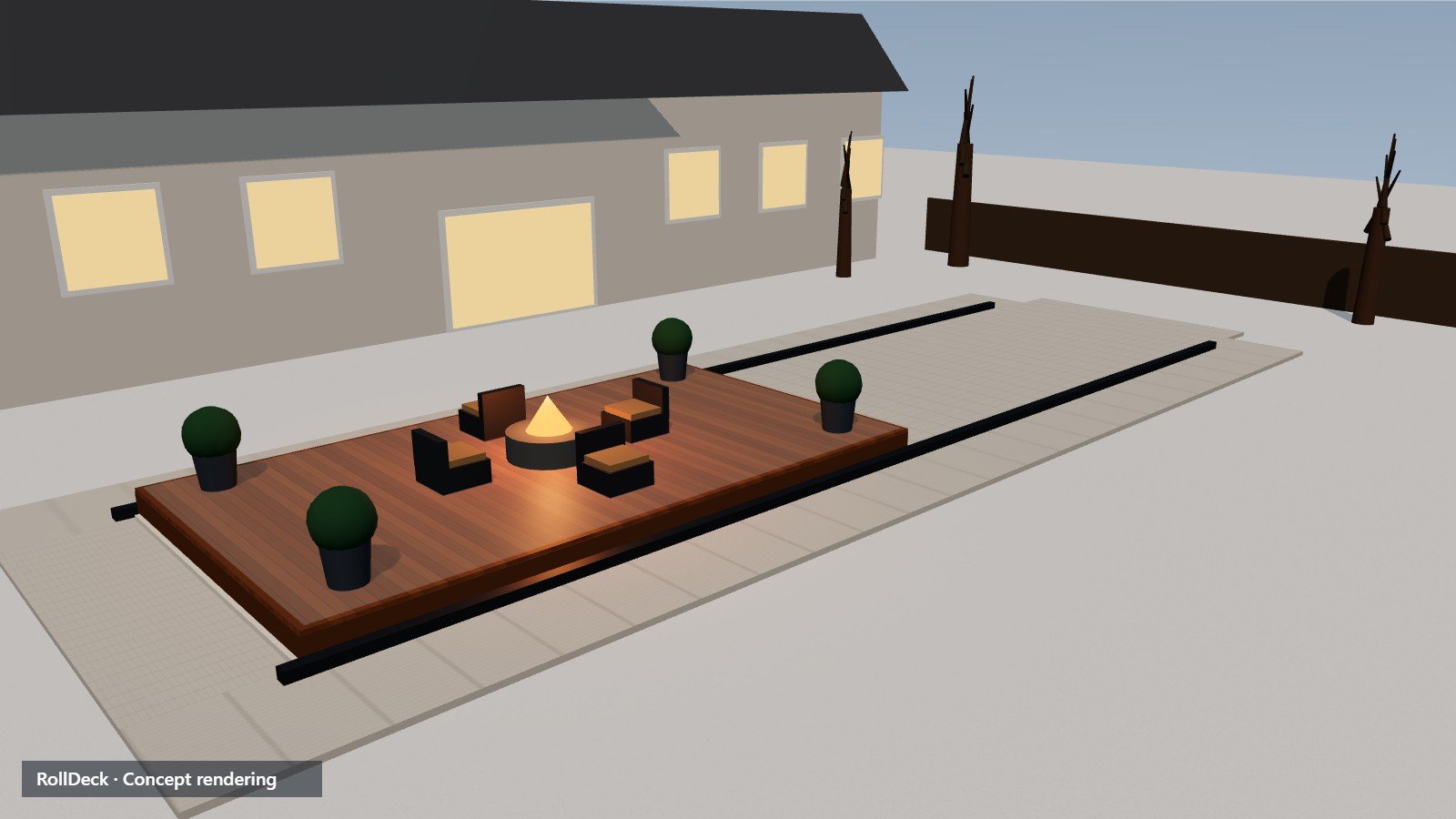
A rigid deck, wider than the pool, that sits on two rails running along the long sides of the pool and out past one end. It rolls over the pool to close it and rolls back to park beside it. Our RollDeck rolls closed and locks in place for winter. Similar rolling decks have been sold in Europe for years; they are still rare in Pennsylvania.
the ugly side of regular covers
Safety covers do their main job well. When they are certified and installed correctly, they are tested to hold weight and keep a small child from slipping into the water. The problems are everything around that job:
- Looks. For six months the centerpiece of your yard is a green or gray tarp.
- Water and leaves on top. Solid covers collect water and leaves and need a cover pump. Even mesh covers sag over time, and loose straps or missing anchors let a cover droop.
- Dirty water in spring. Mesh lets fine dirt and some sunlight through, so spring openings often start with algae and a long cleanup.
- Heavy handling. Removing a cover means unhooking every strap, dragging the cover off, cleaning it, folding it and carrying it away. Solid covers are noticeably heavier than mesh.
- Storage. The folded cover lives in your shed or garage all summer.
- Anchors in your deck. Every safety cover needs a ring of anchors drilled into the patio around the pool.
- Replacement. Fabric wears out in the sun. Plan on replacing a safety cover every decade or so, and an automatic cover’s fabric more often.
Automatic covers solve the handling problem but bring a big price, a reel housing at one end of the pool, and water that still pools on top in winter.
the good side of a rolling deck
- Your pool becomes a patio. Chairs, a fire table or a grill can sit on the closed deck all winter.
- No cover to handle. No straps, anchors, pumping, folding or storage.
- Rigid surface. No sagging and no puddles in the middle.
- Cleaner opening. Leaves stay on top where you can blow them off, and the deck shades the water all winter.
- Extra deck in summer. When it is parked, it is still a deck.
the honest downsides of a rolling deck
- It needs space. You need clear room at one end of the pool roughly as long as the pool, where the deck parks when the pool is open (or half that at each end with a two-piece deck).
- Higher price. A solid rolling deck costs more than fabric. It is a backyard upgrade, not a budget cover.
- Shape limits. Straight rails suit rectangles and near-rectangles. Freeform pools, waterfalls or raised walls along the sides usually rule it out.
- Permanent track. The track stays along the pool year round, and on existing pools the deck sits about a step above the patio.
- Not automatically a safety cover. Ask any rolling deck seller whether their product is certified to ASTM F1346. Ours is not, so your pool fence and gate stay required either way.
- Some upkeep. Hardwood decking can be left to turn silver or oiled once a year, and the track gets a quick check when you open and close.
cost over 15 years
A mesh safety cover is the cheapest to buy, but you will likely replace it at least once over 15 years and you pay for the work of installing and removing it every season (or pay someone to). An automatic cover costs several times more and its fabric is replaced along the way. A rolling deck costs the most up front, but it is built to last as long as the pool, and it adds winter patio space the other two never will. Which one is “worth it” depends on how much you value that space and your time each fall and spring.
safety: what really keeps kids out
No cover replaces supervision and a proper pool barrier. Pennsylvania code requires a barrier such as a fence with a self-closing, self-latching gate around a residential pool. A certified safety cover adds a second layer in winter. If you are comparing a rolling deck with a safety cover for safety alone, choose a certified safety cover. Choose a rolling deck for how you want to live with your yard, and keep your fence.
so which should you choose?
a safety cover is a great fit if
- you want the lowest cost and a certified winter cover
- your pool is freeform or has features along the edge
- you do not mind the yearly install and removal
an automatic cover is a great fit if
- you swim often and want the pool covered between swims
- you want heat and water savings in summer, not only a winter cover
a rolling deck is a great fit if
- your pool is rectangular and there is room at one end for the deck
- you want to use the pool area as patio space in winter
- you are done wrestling with a cover every fall and spring
Not sure which fits your yard? We measure for free across Delaware, Chester, Montgomery and Bucks counties. Book a backyard measurement or read more about RollDeck.